
PMC FSCC pilot testing guides refinement of five micro-credentials
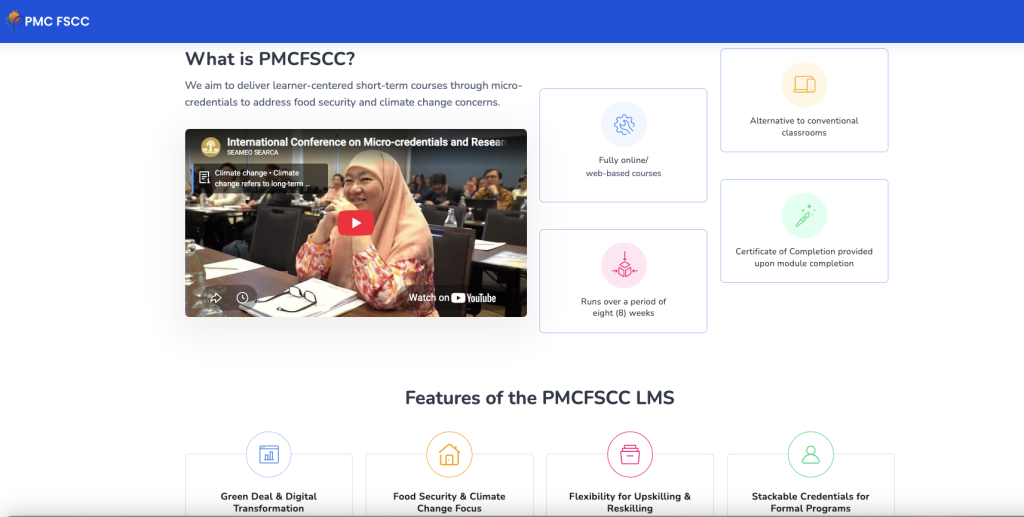
Two pilot runs of the Postgraduate Micro-credentials for Food Security and Climate Change (PMC FSCC) tested five online modules with 102 learners from partner universities and generated feedback to improve course content, delivery, and learner support.
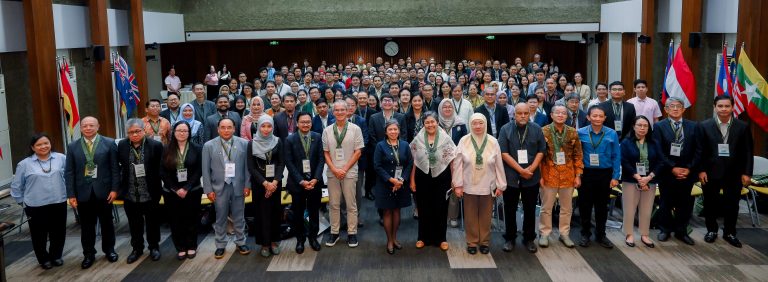
The pilot runs, conducted from 27 March to 23 May 2025 and from 5 August to 6 October 2025, involved students, alumni, staff, and faculty nominated by IPB University, Universitas Gadjah Mada, and Universitas Brawijaya in Indonesia; Universiti Malaysia Sabah and Universiti Putra Malaysia in Malaysia; Maejo University and Kasetsart University in Thailand; and the University of the Philippines Los Baños, Central Luzon State University, and Visayas State University in the Philippines. The activities formed part of the PMC FSCC project, supported by the Erasmus+ Capacity Building in Higher Education (CBHE) program.
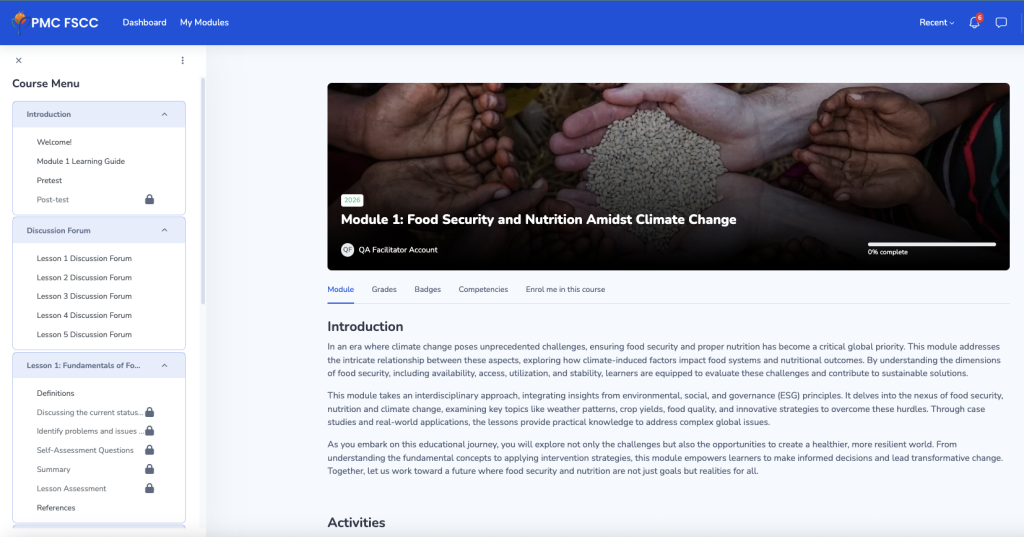
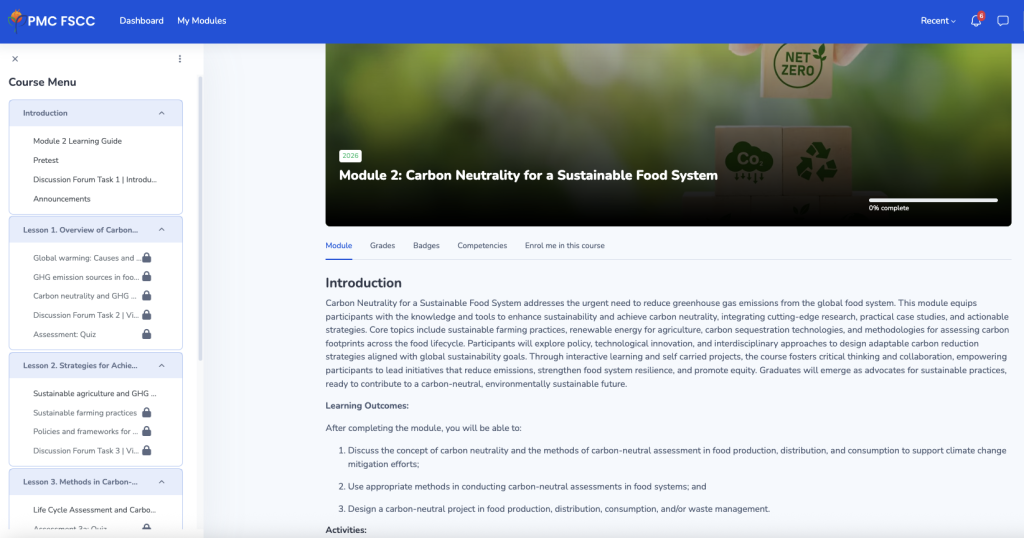
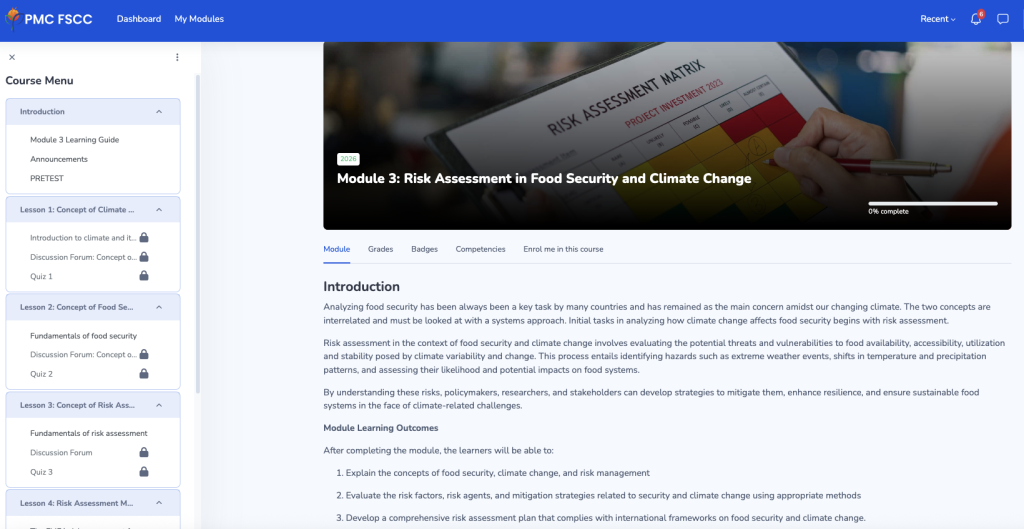
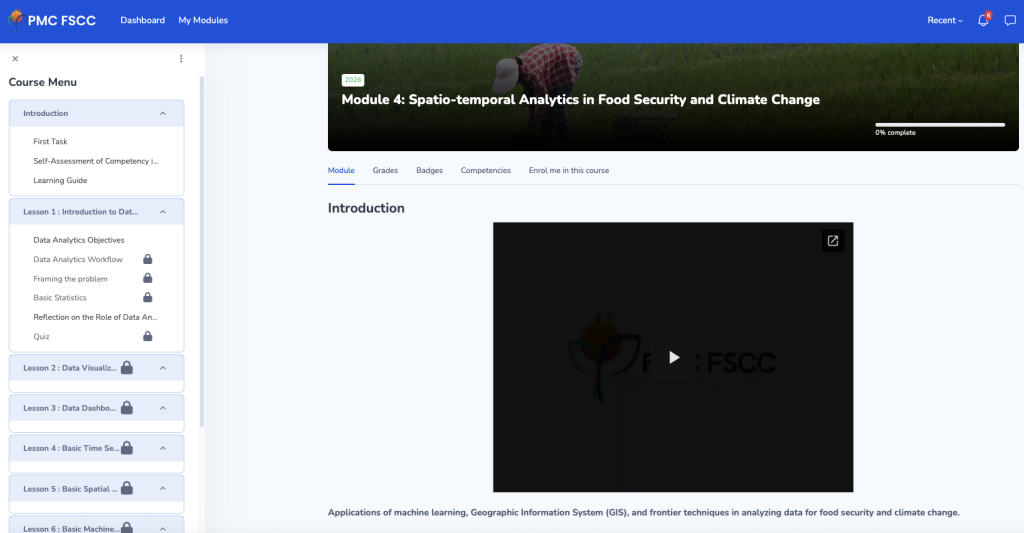
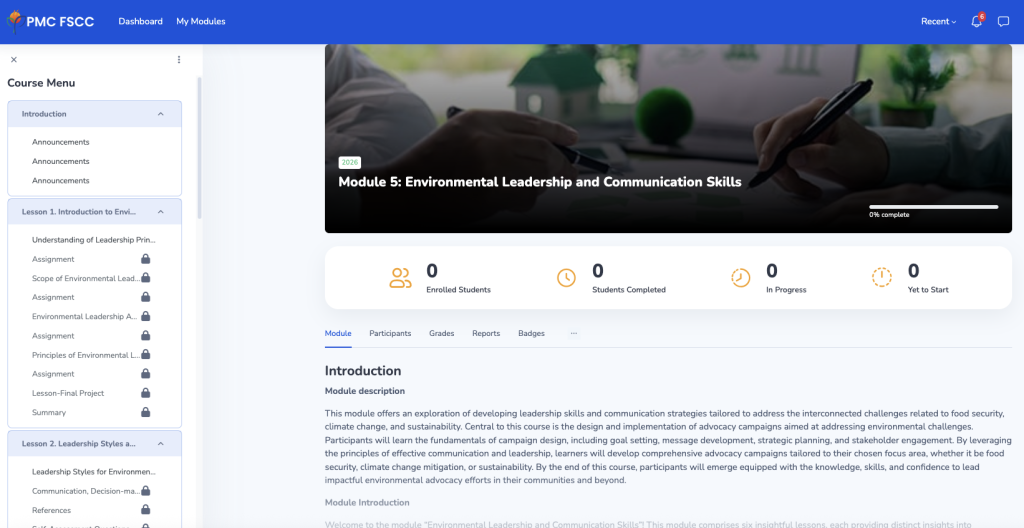
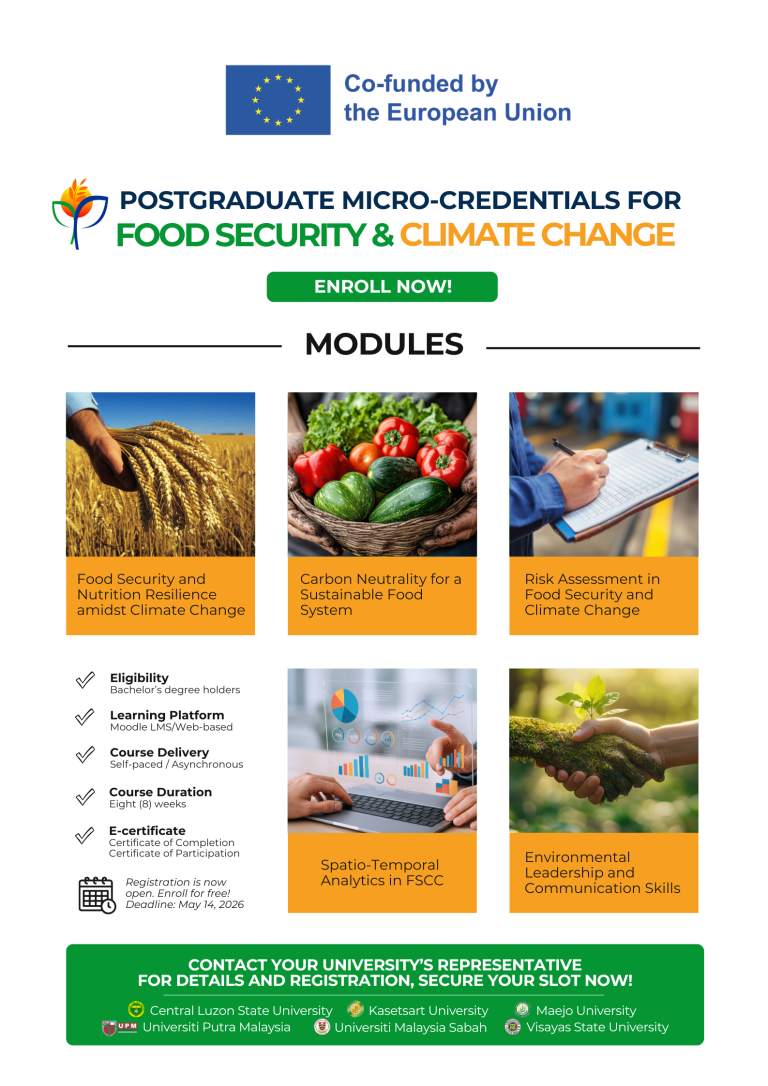
The five modules covered Food Security and Nutrition Amidst Climate Change; Carbon Neutrality for a Sustainable Food System; Risk Assessment in Food Security and Climate Change; Spatio-temporal Analytics in Food Security and Climate Change; and Environmental Leadership and Communication Skills. Developed collaboratively by partner universities and supported by instructional designers and facilitators from the University of the Philippines Los Baños (UPLB), they were delivered through the Moodle learning management system.
A total of 52 learners completed the evaluation surveys across the two runs, and an online focus group discussion on 8 October 2025 with 15 participants provided further insights into their learning experiences and suggestions for improvement. Feedback highlighted the modules’ relevance to learners’ research and professional work. Respondents generally reported gaining new knowledge and skills and feeling confident applying what they learned, especially in activities that connected concepts to real food security and climate change concerns.
Useful components included carbon footprint and carbon credit calculations, risk assessment tools and plans, geographic information system applications, data visualization, and communication strategy and advocacy tasks. Case studies, videos, and practical exercises helped learners relate the lessons to their own contexts.
Balancing study with work and personal responsibilities emerged as a key challenge to completing the course on time. The evaluation recommended clearer pacing guides, flexible deadlines, regular reminders, and stronger academic and technical support to help learners sustain participation.