PMC FSCC officially launched with 188 learners

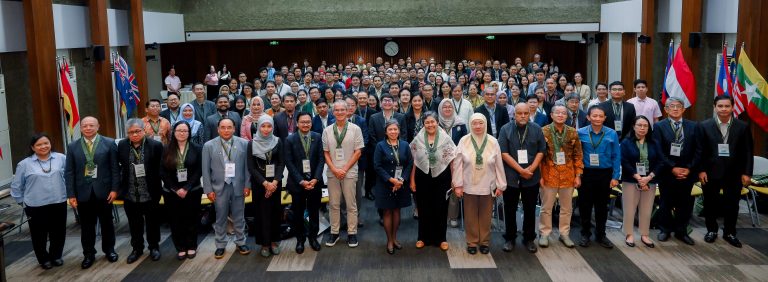
The first official run of the Postgraduate Micro-credentials for Food Security and Climate Change (PMC FSCC), which began in May 2026, engaged 188 learners across six partner universities in the Philippines, Thailand, and Malaysia. The official offering followed two pilot tests in 2025, module improvements, and a training-of-trainers activity. These preparations provided a basis for delivery through participating partner universities.
The six universities that facilitated the offering were Central Luzon State University and Visayas State University in the Philippines; Kasetsart University and Maejo University in Thailand; and Universiti Malaysia Sabah and Universiti Putra Malaysia in Malaysia.
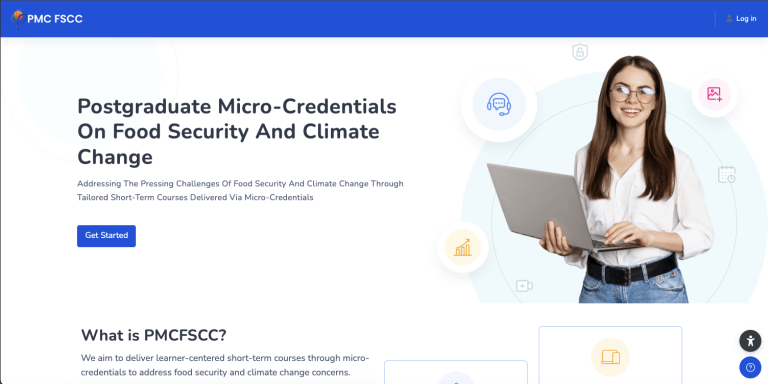
The official offering comprised five modules: Food Security and Nutrition Amidst Climate Change; Carbon Neutrality for a Sustainable Food System; Risk Assessment in Food Security and Climate Change; Spatio-Temporal Analytics in Food Security and Climate Change; and Environmental Leadership and Communication Skills. The modules covered technical and communication skills relevant to addressing food security and climate change concerns.
The LMS showed 391 module enrollments, representing 188 individual learners, some of whom enrolled in more than one module. Environmental Leadership and Communication Skills recorded the highest number of enrollments at 90, followed by Food Security and Nutrition Amidst Climate Change with 85. Of the 188 learners, 100 (53.2%) enrolled in two or more modules, including 22 who enrolled in all five. The remaining 88 learners took one module, underscoring participation across both individual courses and combinations of courses.
The official run provided a longer learning period than the two-month pilot runs. Originally scheduled from May to August 2026, the offering was extended until October 2026 to accommodate different implementation schedules among participating universities. This longer duration was intended to test whether additional time would affect completion compared with the pilot runs.
The University of the Philippines Los Baños (UPLB), lead of WP2: Micro-credentials Development and Training, issued certificates of completion or participation for the official run. Completion required learners to fulfill all module requirements and meet the passing threshold of 55%.